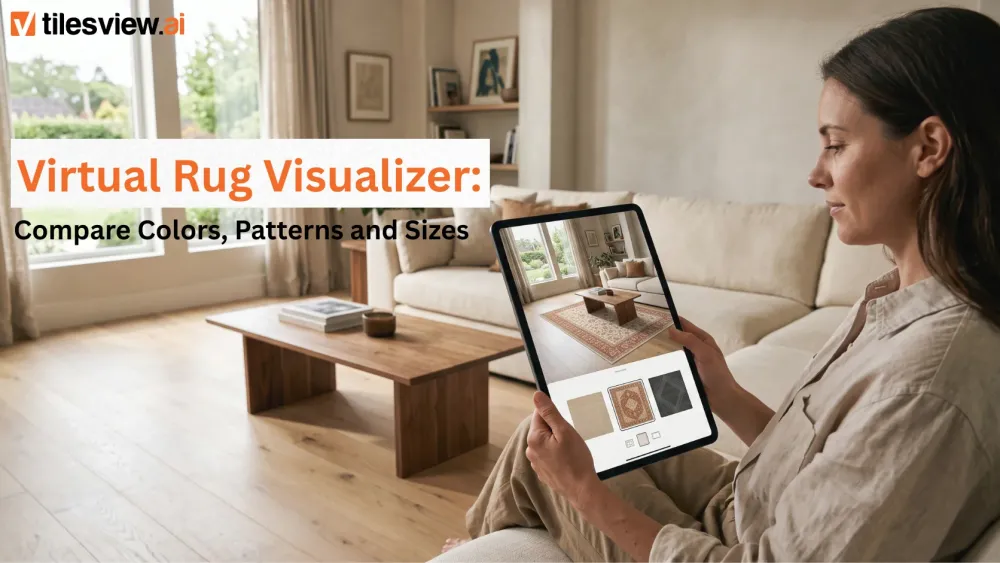
Oct 10, 2026
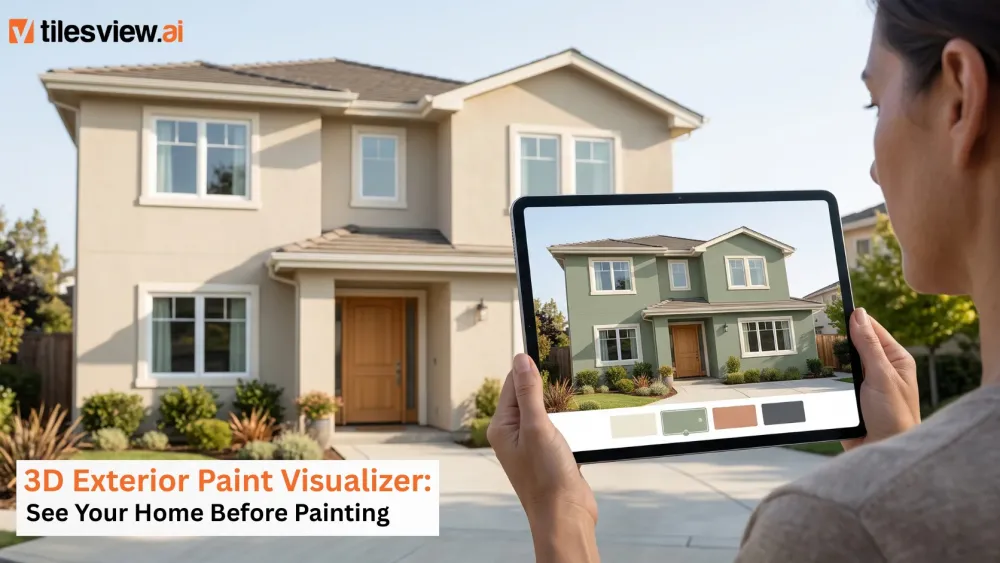
Oct 10, 2026
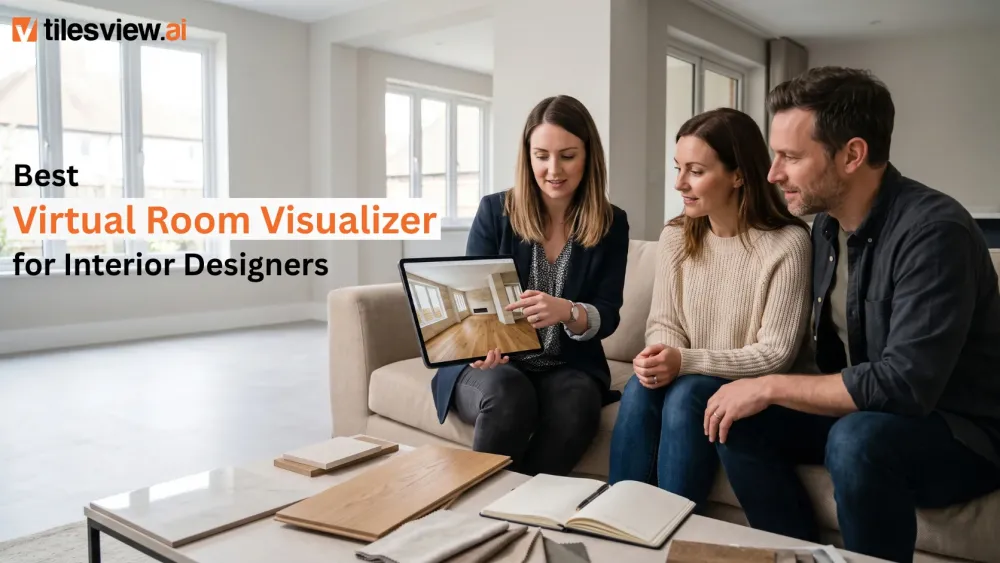
Oct 09, 2026
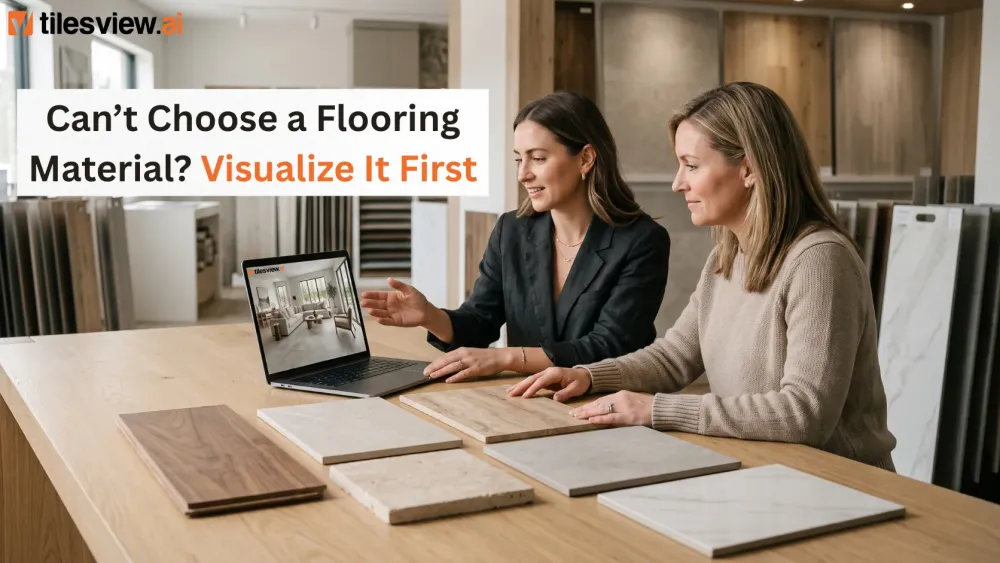
Oct 09, 2026
Sep 16, 2026
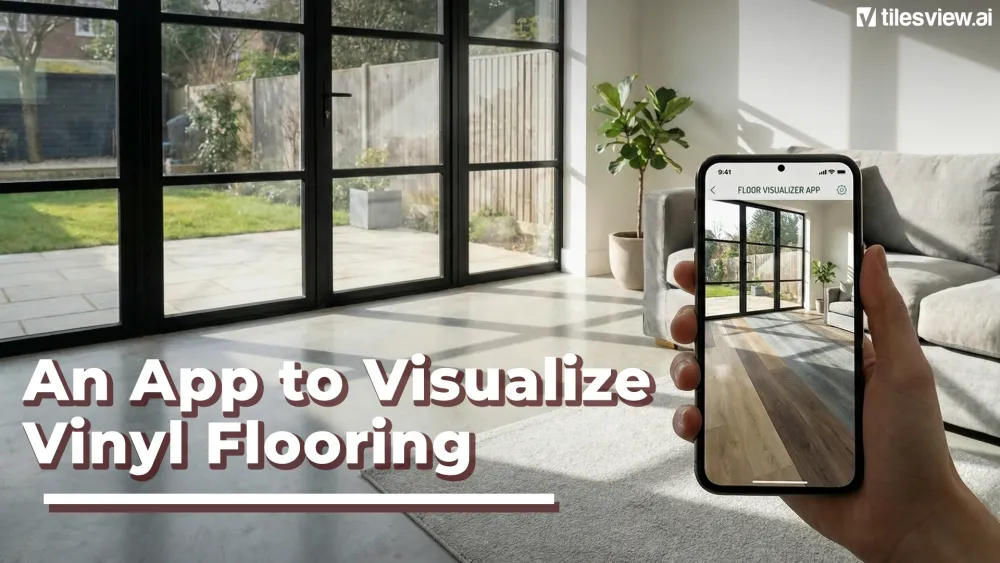
Vinyl flooring is easy to select on the surface. You visit a store, examine good specimens and believe that the job is completed. The issue arises on getting home. That little morsel that you enjoyed in the daytime would appear different in your living room. The color looks darker. The pattern seems busier. Then all of a sudden you think otherwise.
The difficulty lies in the fact that vinyl is a big area which most people find hard to cover. It is not concentrated in a corner of the room. The vinyl appearance is altered by walls, furniture, sunlight and curtains. The brain attempts to imagine the completed room, but the imagination has its boundaries. Making guesses may be dangerous when money and time are involved.
This is not the case with digital tools. A vinyl visualizer stops guessing and lets you see. You can see the vinyl placed over the entire room as an alternative to having to hold samples on the floor. There are visible corners, angles and open spaces.
Some of the buyers are waiting due to fear of repentance. Will this color feel too cold? Will the planks reduce the size of the room? These are valid concerns. They are responded to without pressure by visualization.
In the case of families, it would result in fewer errors. To the owners of the stores it results in less returns. To designers it is better client approval. Vinyl is less stressful when you listen to it before purchasing.

It is not only about shade when it comes to choosing vinyl. The space is very important in the feel of the room. Planks that are straight give a room a serene and well-structured look. Staggered designs give it motion and conceal seams more. Large planks are contemporary; narrow ones are traditional.
An intelligent visualizer can be used to test layouts on the fly. Change patterns in a matter of seconds. There is no furniture to move about or to estimate proportions. The room is updated immediately exhibiting scale and balance.
Color choices are easier too. Small rooms are illuminated with light wood colors. Light colors are suitable in family rooms. Large areas are made more detailed with dark finishes. You do not have to guess, but see them nicely on screen.
Textures matter. Matte finishes feel softer. Shiny surfaces are light reflective and bold to touch. A good tool displays depths in the texture of the floor to ensure it does not look flat or artificial.
Users also like the speed with which they are able to compare styles. One click shows a new option. A second click retrieves the old one back. This streamline process saves time and creates trust.
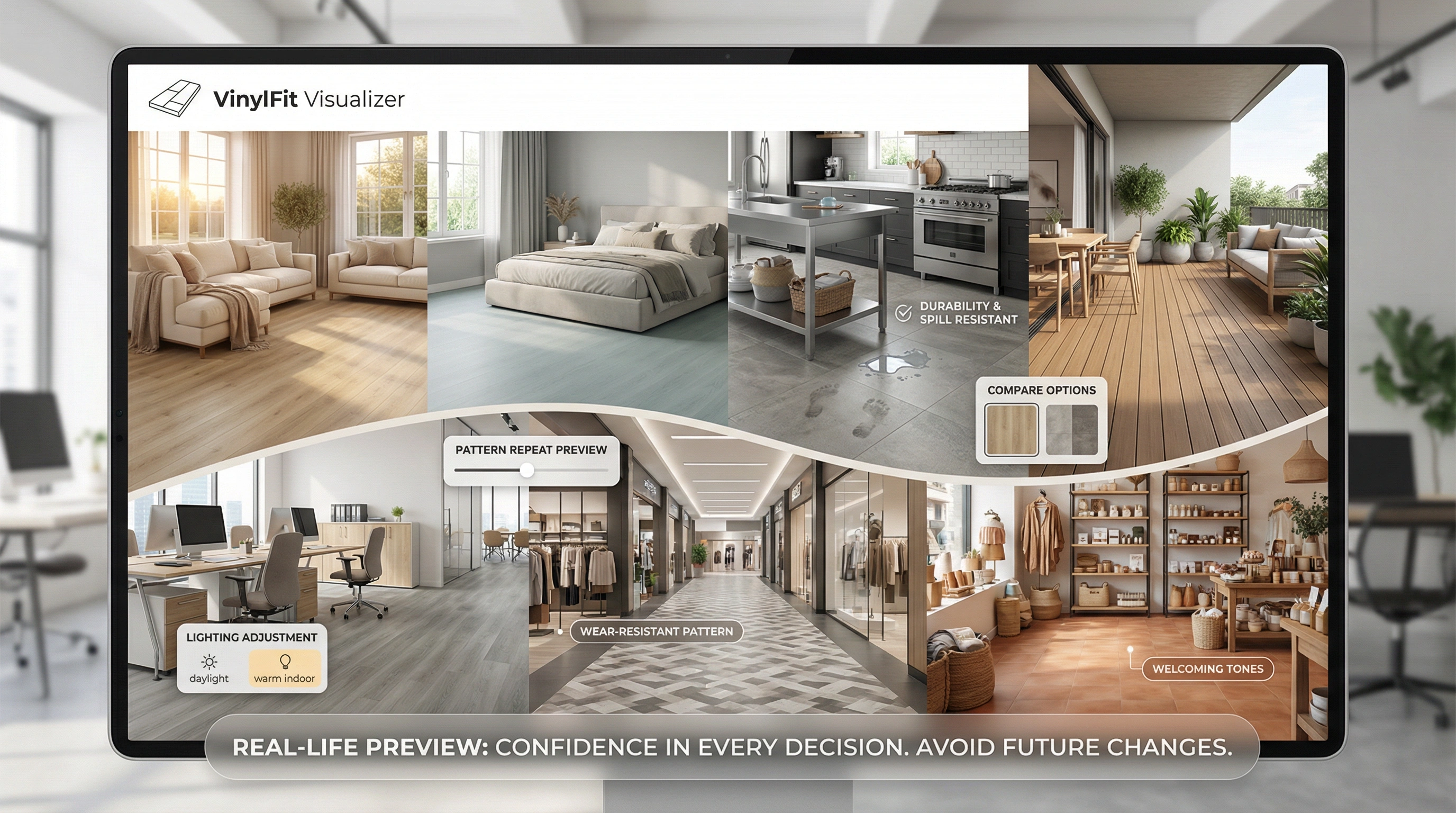
Vinyl sells in a variety of locations, yet each of them requires an own selection. Living rooms usually require a sense of warmth and equilibrium. Softer tones are more convenient in bedrooms that make one relax. Kitchens require a nice-looking vinyl that is capable of dealing with spills and foot traffic.
Vinyl that is moisture resistant is also applicable in balconies and semi-outdoor spaces. Online previews allow customers to visually compare the way the inner and outer areas are interrelated.
Business areas have other requirements. The offices should have professional appearances. Shopping malls should be patterned in a way that conceals wear. Local stores are interested in having welcoming flooring but not drab.
Business owners try large surfaces of flooring with a visualizer. They observe the repetition of patterns and responses of colors to varying lights.
A big number of individuals visit the internet where they hope to watch vinyl in their room before they use money. The visual tools provide the answer to that requirement. They allow users to view flooring in real life as opposed to empty showrooms.
Working with vinyl in various rooms types, the buyers are assured. This eliminates stress and prevents expensive alterations in the future.
Tilesview has a significant number of users who have a definite purpose to make use of visualization. It enables homeowners to make upgrades fearlessly. They experiment in the house and consult their family.
Visualization is a technique applied by interior designers to describe concepts. They represent actual previews instead of long notes. Clients make decisions quicker and give their projects a green light.
Retailers gain through provision of both online and in-store digital previews. Customers browse and are willing to make purchases. This also lowers the sample handling and storage expenses.
Visual tools are used by builders and architects at a planning phase. Flooring does not come as an additional consideration. Alterations occur at the initial stage rather than at installation stage.
Online sharing is also supported by tilesview. Users store photos, compare alternatives and talk about the ideas with other people. The seamless process helps the projects to continue.
For many professionals, the vinyl visualizer is a daily tool, not just a one‑shot feature.
Tilesview is concerned with simplicity and clarity. It has an interface that is user-friendly even to a first-time user. No design skills are needed. Choose a room and upload a photo and begin testing.
The images are realistic as the lighting and angles are used cautiously. Walls and floors are in alignment with each other naturally. Patterns do not stretch or appear to be clumsy. This realism builds trust.
Tilesview is also business need friendly. One can add it to the websites or showrooms. Sharing options enable the customers to send previews to family members or clients.
Above all, Tilesview makes individuals secure. The process of flooring is made an easier and more pleasant. Users are able to go searching without fear of making mistakes.
When individuals view the end product, they become quicker and will be more contented with their buying. Vinyl ceases to be a gambling game and turns out to be a strategized decision with clear images.

Anand Bhoraniya is a technology entrepreneur and visualization innovator at Tilesview, specializing in AI-powered room visualization software for tile, flooring, paint, and wall covering brands. He regularly shares insights on AI visualization trends, virtual showroom experiences, personalized design technology, warm minimalist interiors, and photorealistic room design solutions.
Get the latest insights on room visualizer, interior design trends, and product updates delivered to your inbox.
No spam. Unsubscribe anytime.